

Category
Trends in TechnologyDate Posted
February 19, 2026As 2026 progresses, it is evident that artificial intelligence (AI) has developed into an effective means for educators and students both, facilitating individualized learning and generating fresh approaches to instruction and student engagement. At the same time, the education sector is experiencing a "skills crunch" and is in urgent requirement of individuals capable of using technology in order to promote innovation and growth.
These two problems are closely related. Technology is changing how we prepare for it as it changes business and industry. The most valuable skill in this fast-paced, modern world is the ability to learn and success may depend more on agility and adaptability than on a degree or other credentials.
So, with that in mind, here is what I believe will be the most important trend affecting skills and education in 2026.
1. AI Agents In Education and Learning
Artificial intelligence is trending and agents are becoming increasingly popular. Imagine chatbots like ChatGPT that can do more than just answer questions and produce content, they can also take action, communicate with external systems and do complicated tasks. During a student's learning journey, teachers will use them to analyze, respond and change the pace in order to personalize instruction to meet the student's diverse needs. They will become personal learning assistants for students in both formal and informal contexts, capable of creating tailored, engaging learning environments.
2. AI Literacy
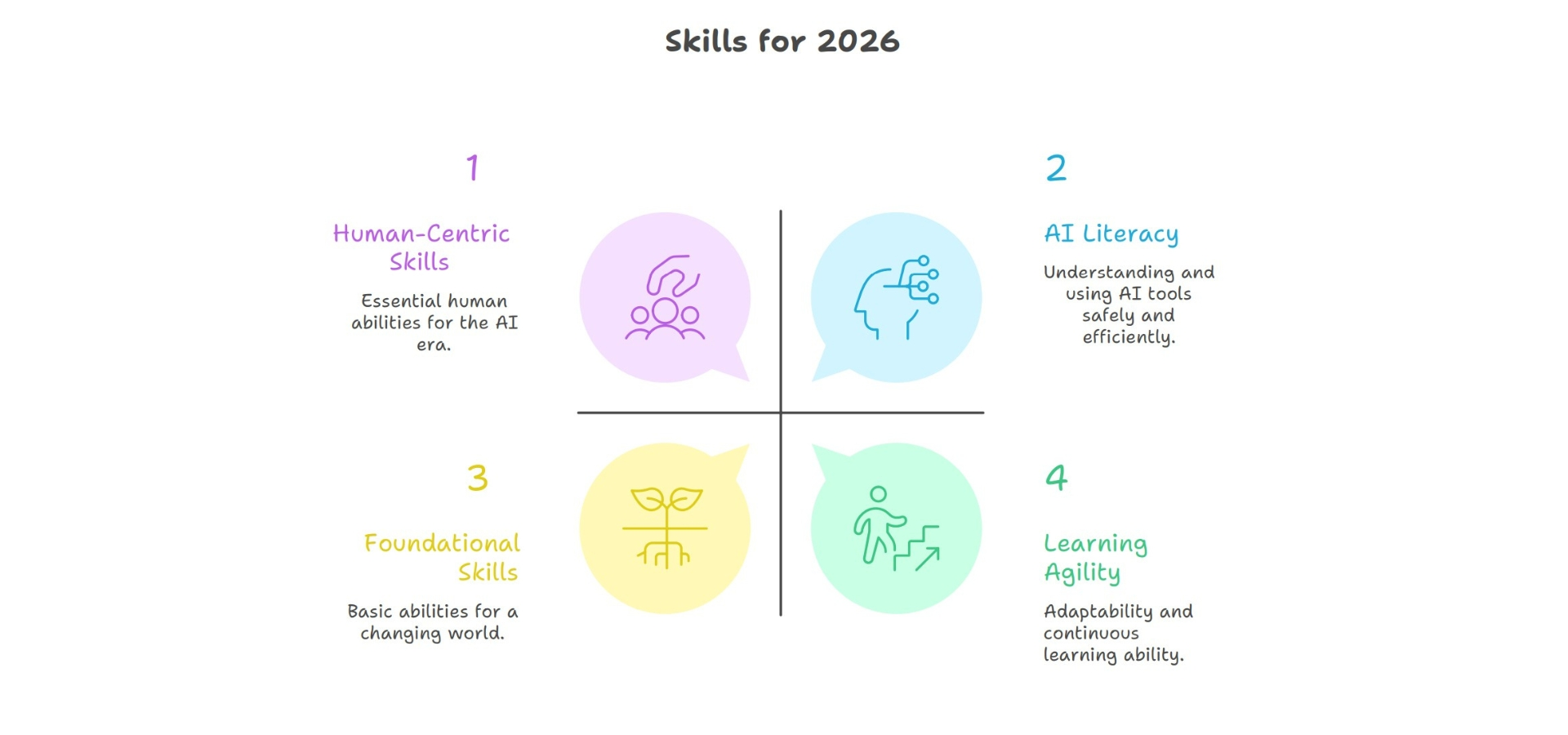
Understanding how to use AI tools safely and efficiently will be critical for both students and teachers. Courses in AI competency are likely to appear in curriculum at all levels as we recognize its potential impact on individuals who understand how to use it. This includes not only technical proficiency, but also an understanding of the risks involved.
In addition, many new work possibilities will be generated. Of course, many of these will be technological in nature, involving sectors such as AI, cyber security, robots and bioscience. It might also include physical chores that robots will take some time to catch up on.
3. Learning As a Skill
When the world is changing at such a rapid pace, the most important ability is being able to adapt. The truth is that learning is a skill itself and it can be enhanced through study and practice. This includes taking advantage of opportunities such as online learning and micro-learning, as well as reflection to better understand the personal characteristics that influence our ability to learn. Apart for this particular skill, none will be completely future-proof by 2026.
4. Human-Centric Skills
With computers capable of managing many of the regular, technical and administrative aspects of education, the importance of human abilities that cannot be replicated grows. The capacity to build interpersonal relationships, lead, empathize, collaborate, use our fundamentally human creativity and plan long-term strategies while considering variables beyond what machines can see are all crucial talents in the AI era. The future maybe algorithm-driven but the human touch will remain crucial in all professions, from teaching to developing new technology.
As education, learning and future readiness rapidly transforms in 2026, preparing children is no longer just about technology, it is about helping them distinguish human values from machine influence. The future belongs to those who can think critically, act responsibly and solve real-world problems by balancing innovation with empathy. With Safe4Sure as a trusted ally, families can nurture these skills within a safer, more guided digital environment.
FAQs
AI is enabling personalized learning experiences by adapting content, pace and feedback to each student’s needs. Intelligent tools can analyze progress, identify gaps and support teachers in providing personalized interventions making learning more engaging and effective.
AI literacy helps students understand how to use technology responsibly and in a balanced manner, evaluate information critically and recognize both the opportunities and risks of AI. It prepares them for future careers while ensuring they remain ethical and informed digital users.
In a rapidly changing environment, the ability to continuously learn, unlearn and adapt is more valuable than memorizing fixed knowledge. Students must develop inquiry, reflection and self-directed learning habits to stay relevant in evolving industries.
Skills such as empathy, collaboration, leadership, creativity, ethical decision-making and overall wellbeing cannot be replicated by machines. These human-centric abilities are critical for solving real-world problems, maintaining emotional balance and building meaningful relationships in an AI-driven society.
Safe4Sure provides a safer digital environment through guided access and wellbeing-focused tools. It empowers parents to encourage exploration of technology while ensuring children develop responsible online habits alongside academic and life skills.
Author's Bio

Dr. Asif Gani blends two decades of global healthcare leadership with a heartfelt mission to safeguard children in the digital age. As CEO of Safe4Sure, he champions tech-driven, evidence-based solutions that help families raise emotionally resilient and digitally safe kids.