

Category
Health and WellbeingDate Posted
February 18, 2026Is Your Child Truly Safe Online? Understanding Digital Resilience
Have you ever wondered how your child deals with challenges online. Just like we teach children to cross the street safely or handle conflicts at school, they also need skills to navigate the digital world confidently and responsibly. This is where digital resilience comes in.
What is Digital Resilience?
Digital resilience means recognizing potential online risks, knowing how to respond if problems arise, learning from your online experiences and bouncing back from any challenges or setbacks.
Digital resilience is a child’s ability to:
- Recognize when something online might be harmful or unsafe.
- Know where and how to seek help or advice when needed.
- Recover and manage emotions after upsetting online experiences.
Children who develop digital resilience are better at handling challenges, making informed choices and maintaining their emotional well-being.
Why Digital Resilience Matters?
Today’s children spend a significant amount of time online. The more time they spend online, the higher their exposure to risks such as:
- Cyberbullying and online abuse - Facing bullying or abuse while online
- Emotional stress from social media comparisons- Feeling pressure or stress from comparing yourself to others on social media
- Exposure to inappropriate or harmful content - Coming across content that is unsafe, harmful, or unsuitable
Unlike school conflicts, online problems often happen privately, making it difficult for parents to notice. Children without digital resilience may struggle to process these experiences, which can affect their confidence, social skills and mental health.
On the other hand, children with digital resilience are more likely to:
- Recognize and respond to risks effectively
- Seek help when required.
- Learn from mistakes instead of being discouraged
- Maintain emotional balance despite online challenges
How to Build Digital Resilience in Your Child
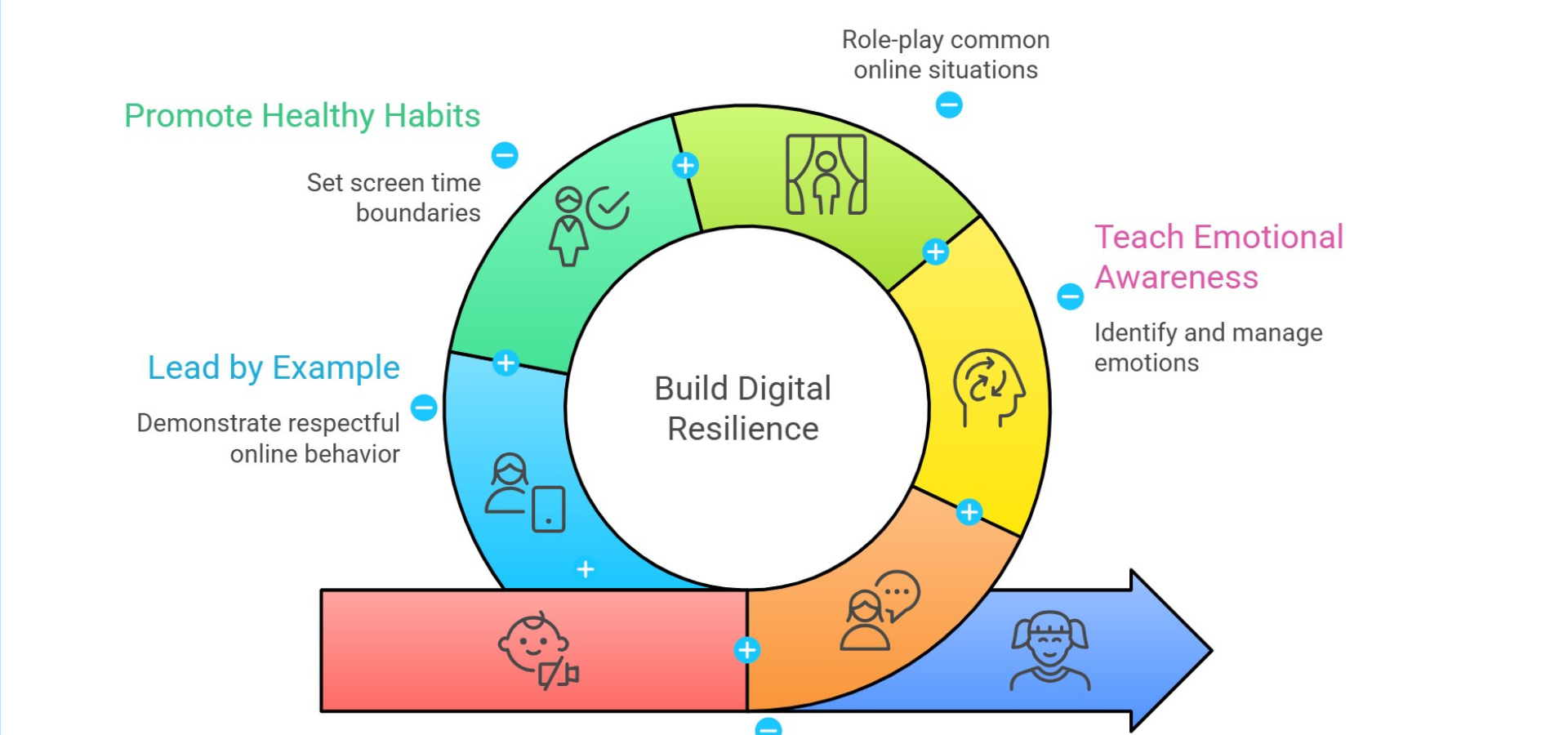
Digital resilience is helping children understand their emotions, communicate effectively and make thoughtful choices online. To safeguard them you can
1. Encourage Open Conversations
Talk to your child about their online experiences. Ask questions such as:
- “How did that post make you feel?”
- “What would you do if someone said something unkind?”
- “Who can you reach out to if something online upsets you?”
Open conversations help children feel comfortable sharing their digital experiences without fear of judgment.
2. Teach Emotional Awareness
Help your child identify emotions like anger, embarrassment, jealousy, or frustration. Encourage them to pause before responding and remind them that online comments do not define their worth.
3. Practice Real-Life Scenarios
Role-playing common situations prepares children to respond calmly. Examples include:
- Receiving stressful messages.
- Being asked to share private information.
- Reporting or blocking inappropriate content.
4. Promote Healthy Digital Habits
- Set reasonable screen time boundaries
- Encourage offline hobbies and social interactions
- Keep devices out of bedrooms at night
- Healthy routines support both emotional and digital resilience, giving children time to reflect and recharge.
6. Lead by Example
- Children notice how adults behave online. Demonstrate:
- Respectful communication on social media
- Regular breaks from screens
- Calm handling of disagreements
By combining practical strategies with emotional support, parents can support their child thrive in digital spaces while staying safe and self-assured.
With Safe4Sure support, you can empower children and families to build digital resilience effectively through, Real-time monitoring and alerts to spot potential risks instantly, helping children recognize and respond to harmful online content.
Content filtering and access controls that block inappropriate material while teaching wise navigation of the digital world.
Emotional wellbeing tools like screen time tracking and behavioural insights to support recovery from upsetting experiences.
Detailed reports and analytics for reflecting on usage patterns, enabling better decisions and healthier habits over time.
Let Safe4Sure empower their digital journey to protect their world.
FAQs
Digital resilience means recognizing potential online risks, knowing how to respond if problems arise, learning from your online experiences and bouncing back from any challenges or setbacks.
Children spend significant time online, exposing them to cyberbullying, harmful content and social media pressure. Digital resilience helps them manage these risks confidently and maintain emotional well-being.
Parents can encourage open communication, teach emotional awareness, role-play online scenarios, set healthy screen time limits and model positive digital behaviour.
Common risks include cyberbullying, exposure to inappropriate content, online scams, privacy threats and emotional stress from social media comparisons.
Safe4Sure supports families with real-time monitoring, content filtering, screen time tracking, behavioural insights and detailed usage reports to help children stay safe and emotionally balanced online.
Author's Bio

Dr. Asif Gani blends two decades of global healthcare leadership with a heartfelt mission to safeguard children in the digital age. As CEO of Safe4Sure, he champions tech-driven, evidence-based solutions that help families raise emotionally resilient and digitally safe kids.